Se trailerFor farvede piger / Silenced No More
Silenced No More · kunstnerisk værk
For farvede piger
Et choreopoem af varme, berøring, vidnesbyrd og kvinder, der samler sig selv tilbage til livet.
For farvede piger Who Have Considered Suicide / When the Rainbow Is Enuf blev den kunstneriske kerne i Silenced No More i Kenya — ikke som illustration, men som levende intervention: sanselig, ceremoniel og følelsesmæssigt ubeskyttet.
Kunstnerisk ramme
Denne side fastholder selve det kunstneriske værk: kvinderne, kjolerne, farven, åndedrættet, cirklen og den ladede tilstedeværelse. Den dokumenterer ikke den bredere intervention omkring projektet. Den bliver hos scenen.
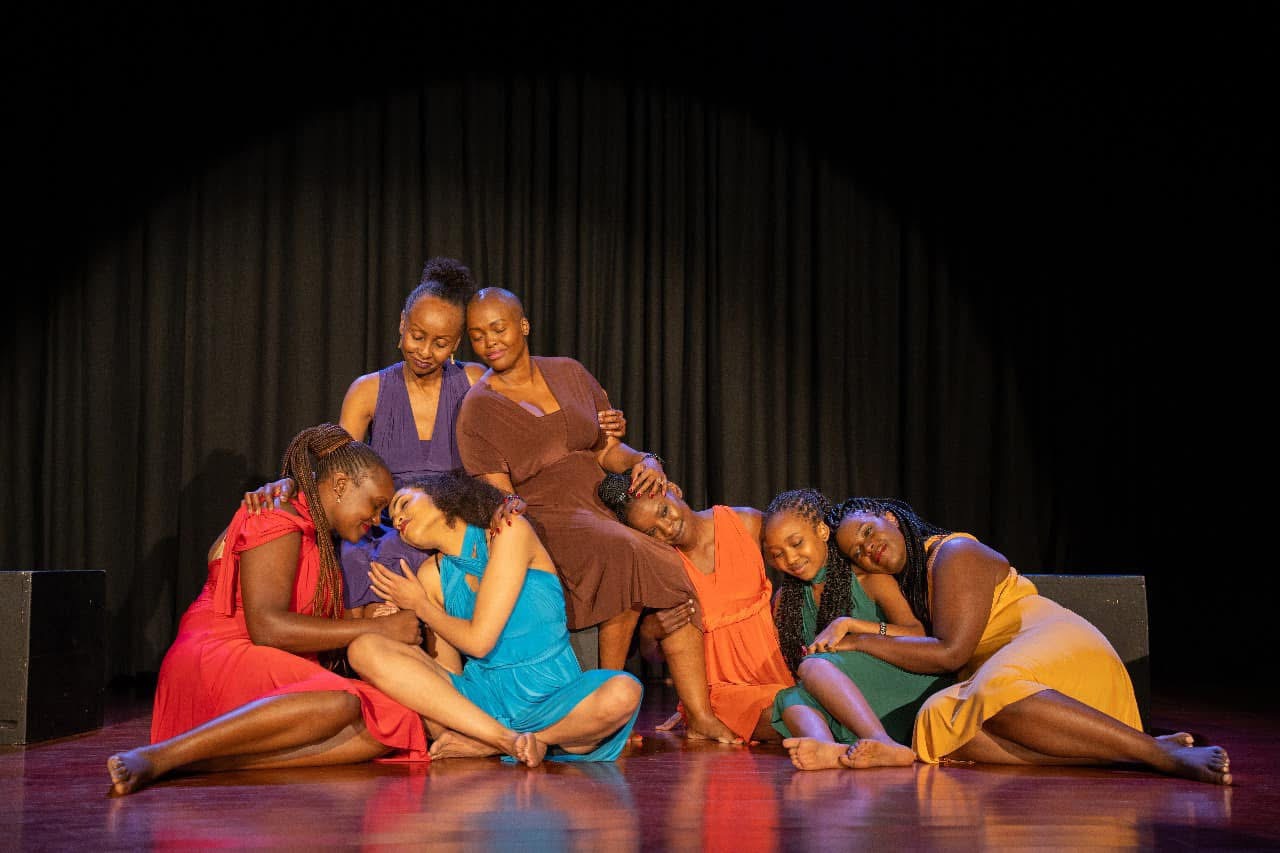
Bygget omkring Ntozake Shanges choreopoem bevægede produktionen sig gennem ømhed, flirt, sammenbrud, selvnavngivning, kollektivt vidneskab og forløsning. Billedverdenen var renset og sanselig: sort rum, skulpturelle blokke, bare fødder og et kromatisk ensemble, hvis kroppe bar den følelsesmæssige arkitektur.
Det, der opstod, var et sprog for kvindeligt fællesskab. Ikke en museumsbehandling, ikke sociologi forklædt som teater, men en levende scenehandling, hvor hver kvinde trådte ind som farve, stemme, rytme, sår og kraft.
Multimediedossier
Et choreopoem bliver et offentligt opgør
Se traileren. Et filmisk glimt ind i forestillingen, der bar Silenced No More fra scene til offentlig samtale i Kenya — gennem vidnesbyrd, farve, bevægelse og kollektivt nærvær.
Kenya16 Days of ActivismUniversiteterEU-delegationenDanmarks AmbassadeOffentlig dialog
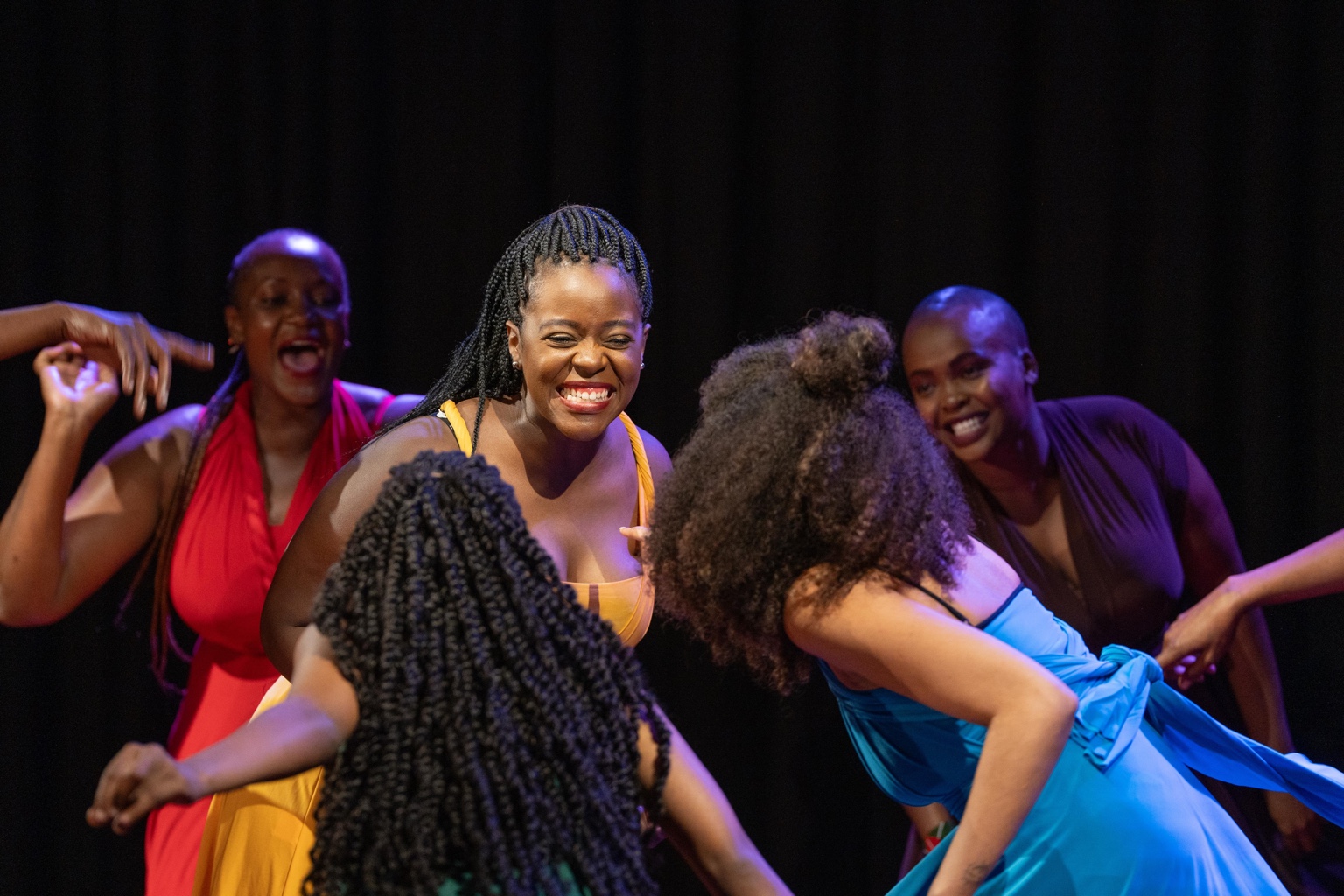
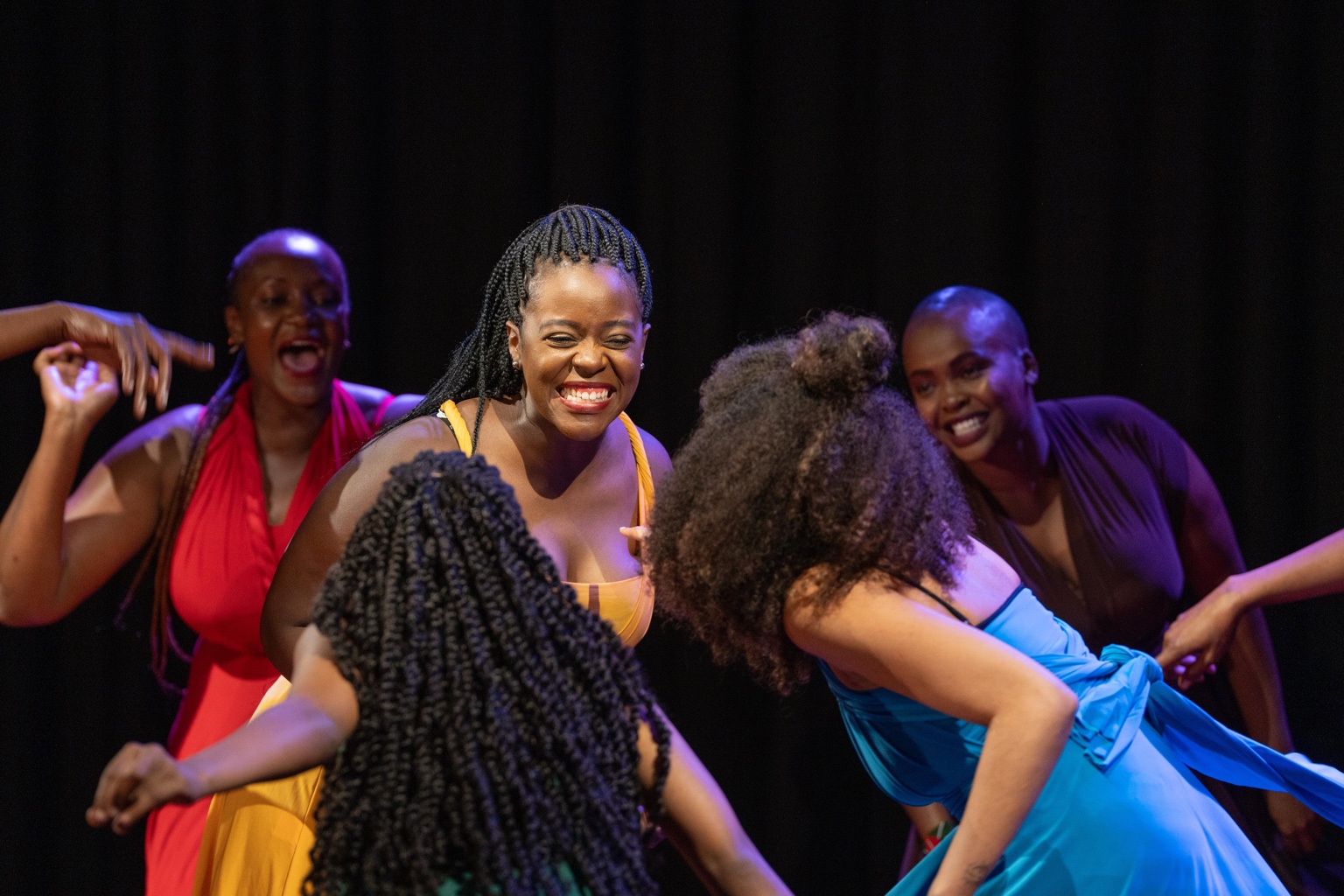
Ensemblet holder scenen som et ladet felt af farve, åndedræt og kollektivt nærvær.
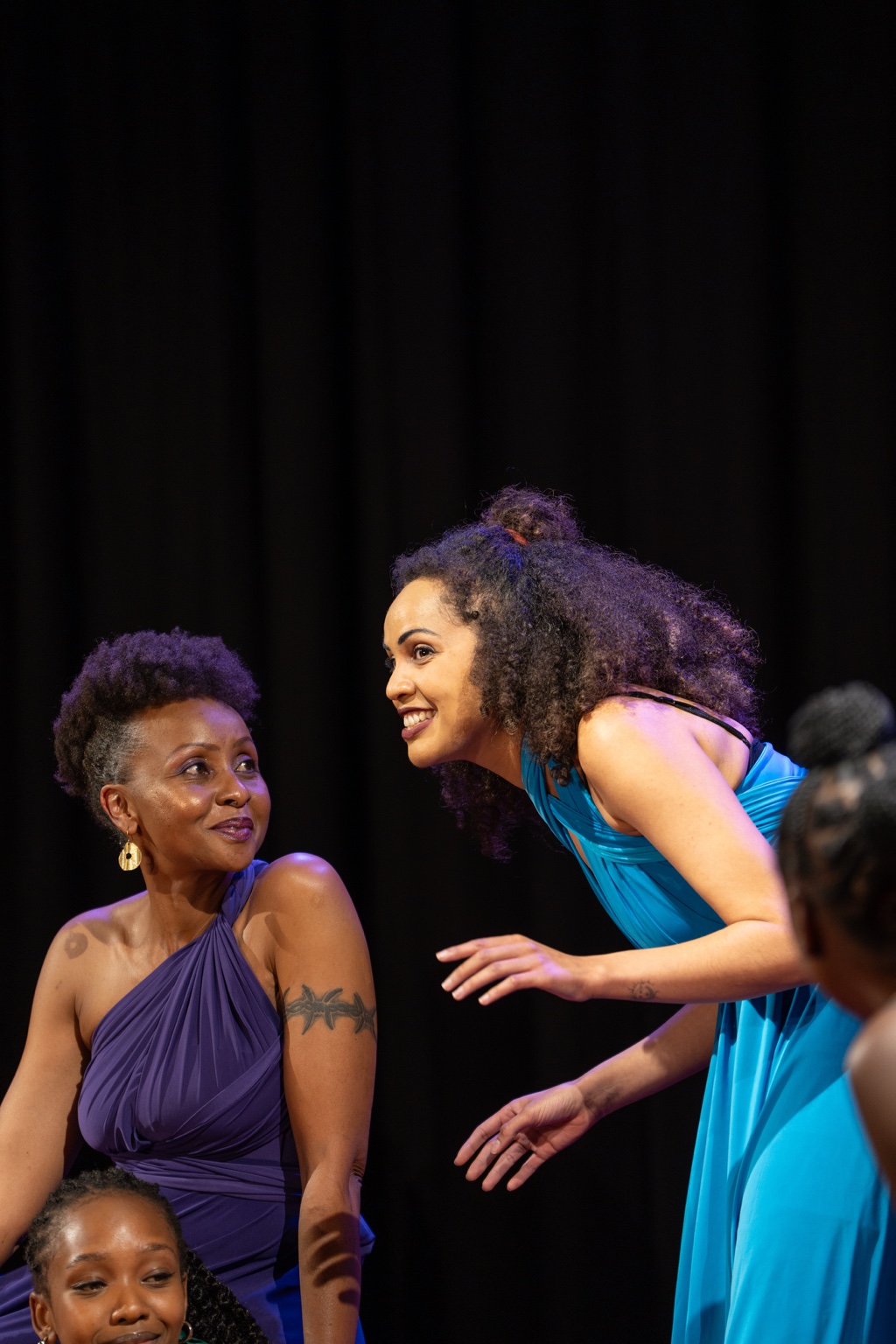
Små gestus bliver omsorgens arkitektur: hånd, blik, lytning, tilbagevenden.
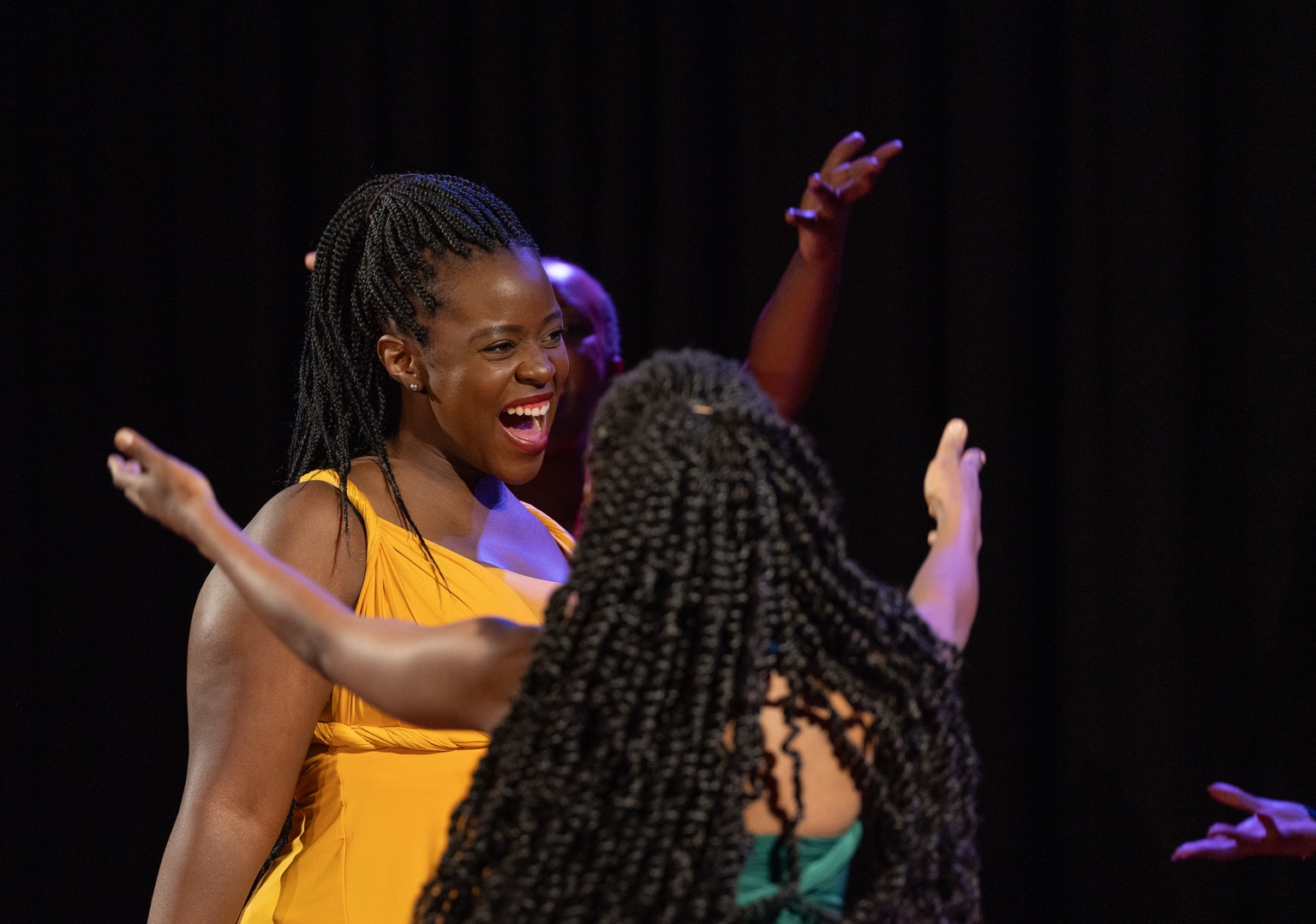
Forestillingen bevæger sig fra såret vidnesbyrd til kropslig nægtelse og forløsning.
Farve som identitet
Barfodet sceneenergi
Choreopoem
Kvindeligt fællesskab
Sanseligt scenesprog
Vidneskab
Forløsning
Farve som identitet
Barfodet sceneenergi
Choreopoem
Kvindeligt fællesskab
Sanseligt scenesprog
Vidneskab
Forløsning
Scene I
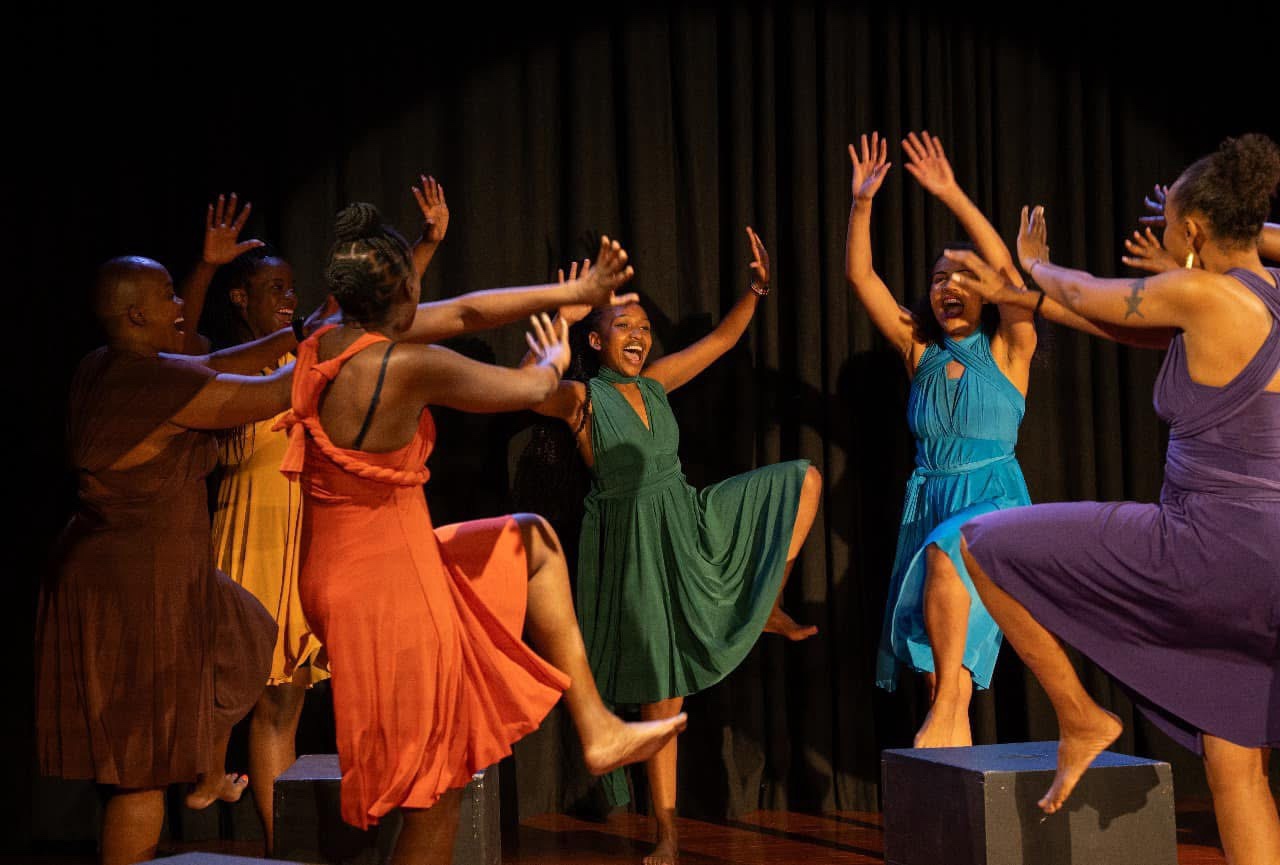
Cirklen åbner
Produktionen begynder med, at kvinderne allerede holder en verden mellem sig — afbalancerede, lyttende, afbrydende stilheden med farve, latter og rituel opmærksomhed.
Scene II
Berøring, drilleri, genkendelse
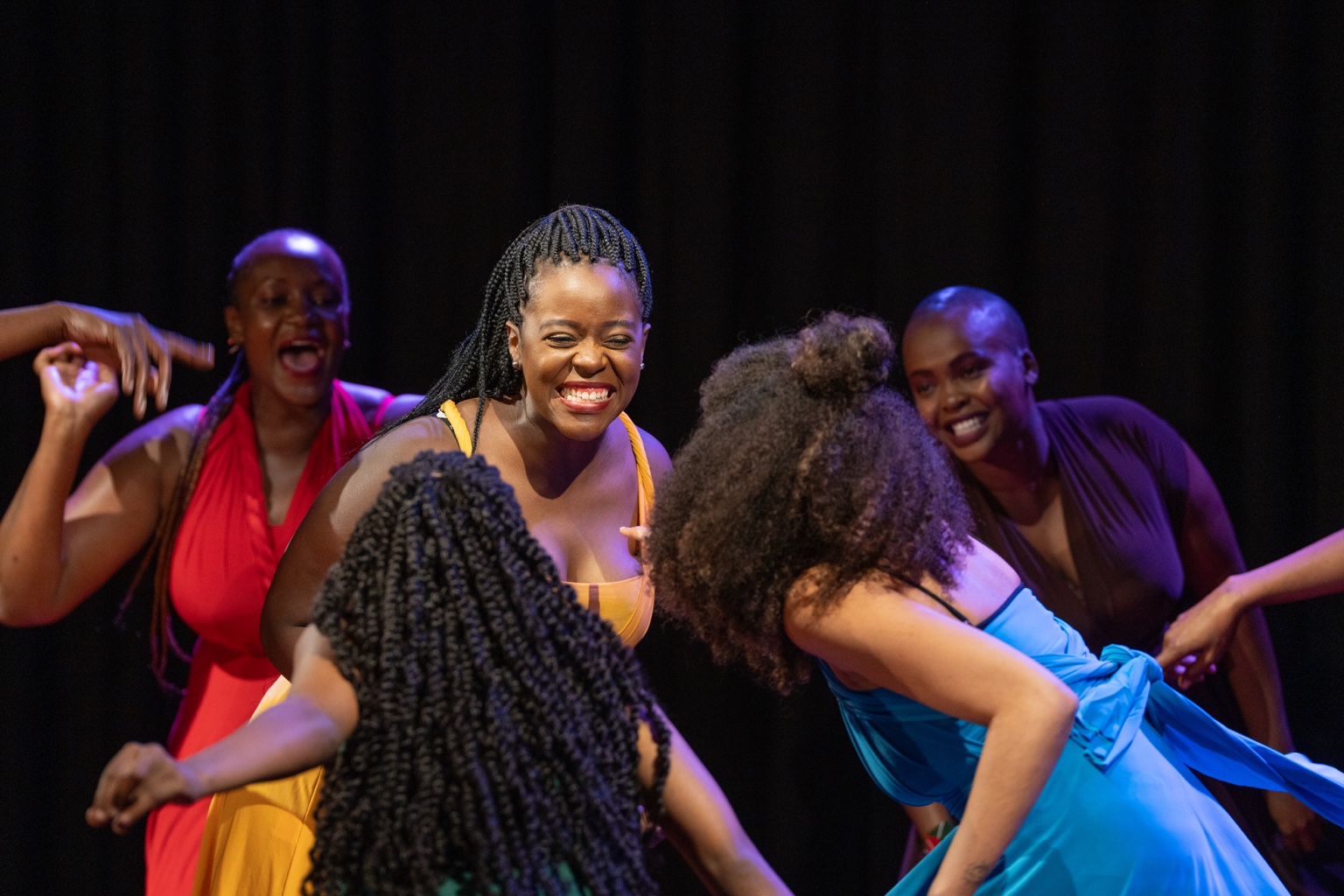
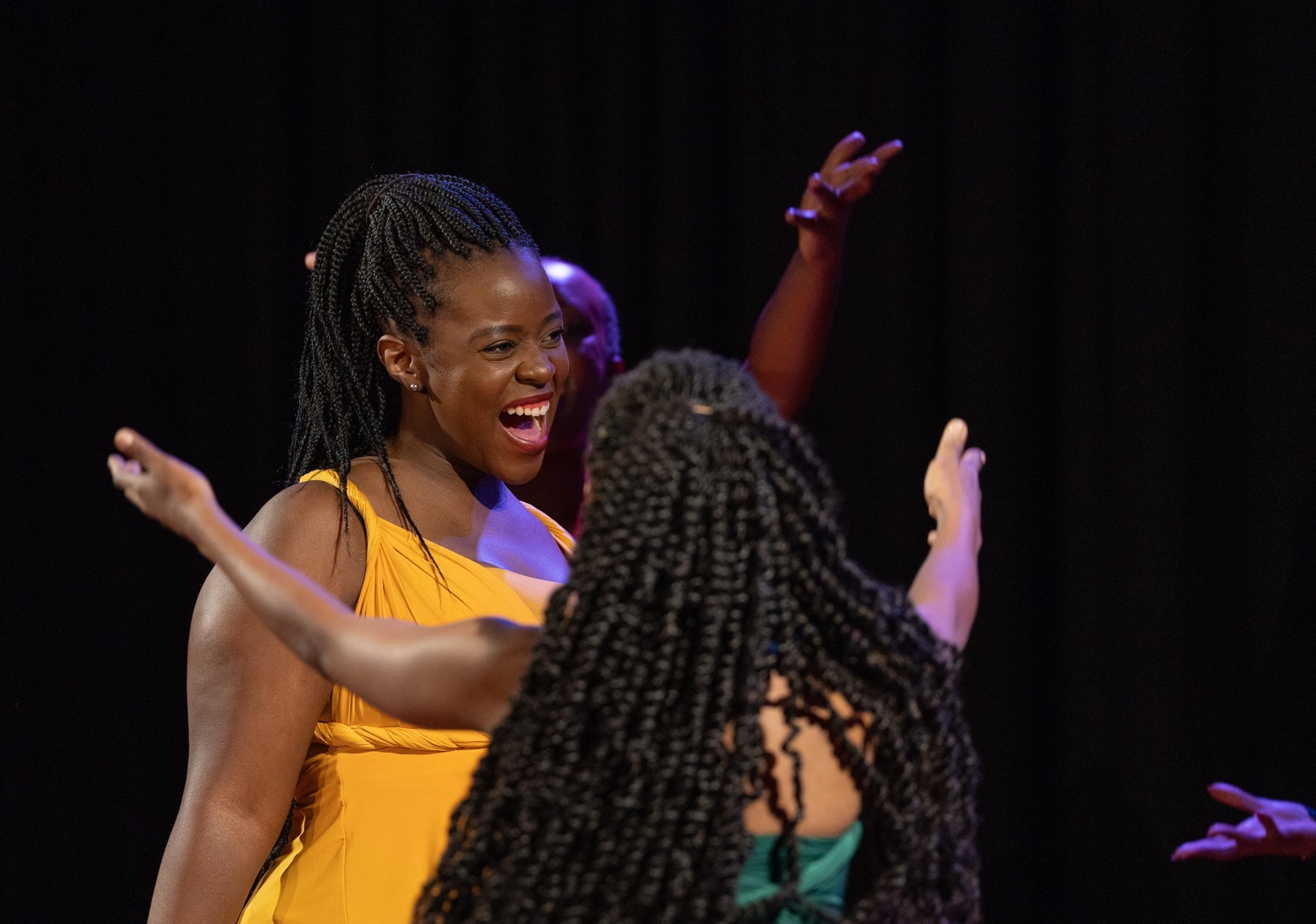
Nogle af de stærkeste billeder kommer ikke fra talen, men fra måden kvinderne møder hinanden fysisk på — håndflade mod håndflade, smil mod smil, krop mod krop — som om selve erindringen bliver givet videre mellem dem.
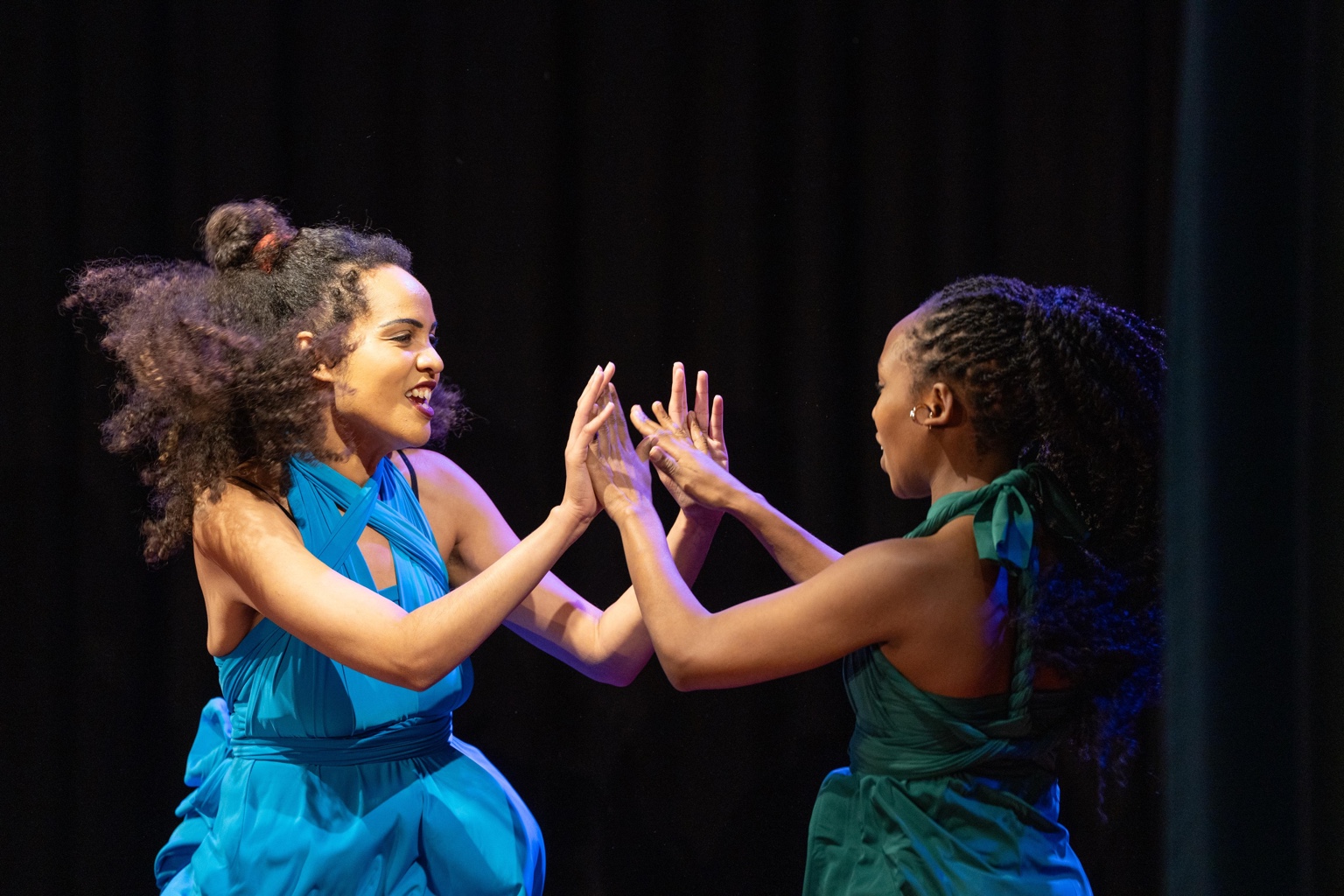
Værkets sanselighed er ikke dekorativ. Den lever i tekstur, timing og relation: stoffets blødhed, skulderens kurve, selvtilliden hos en kvinde, der træder ind i sin egen farve, glæden ved at blive set af andre kvinder, som forstår overlevelsens pris.
Scenen forbliver enkel, så gestussen kan fortættet sig. En løftet arm, et delt blik, et halvt smil, en vinklet hofte — det bliver kompositoriske begivenheder.
Scene III
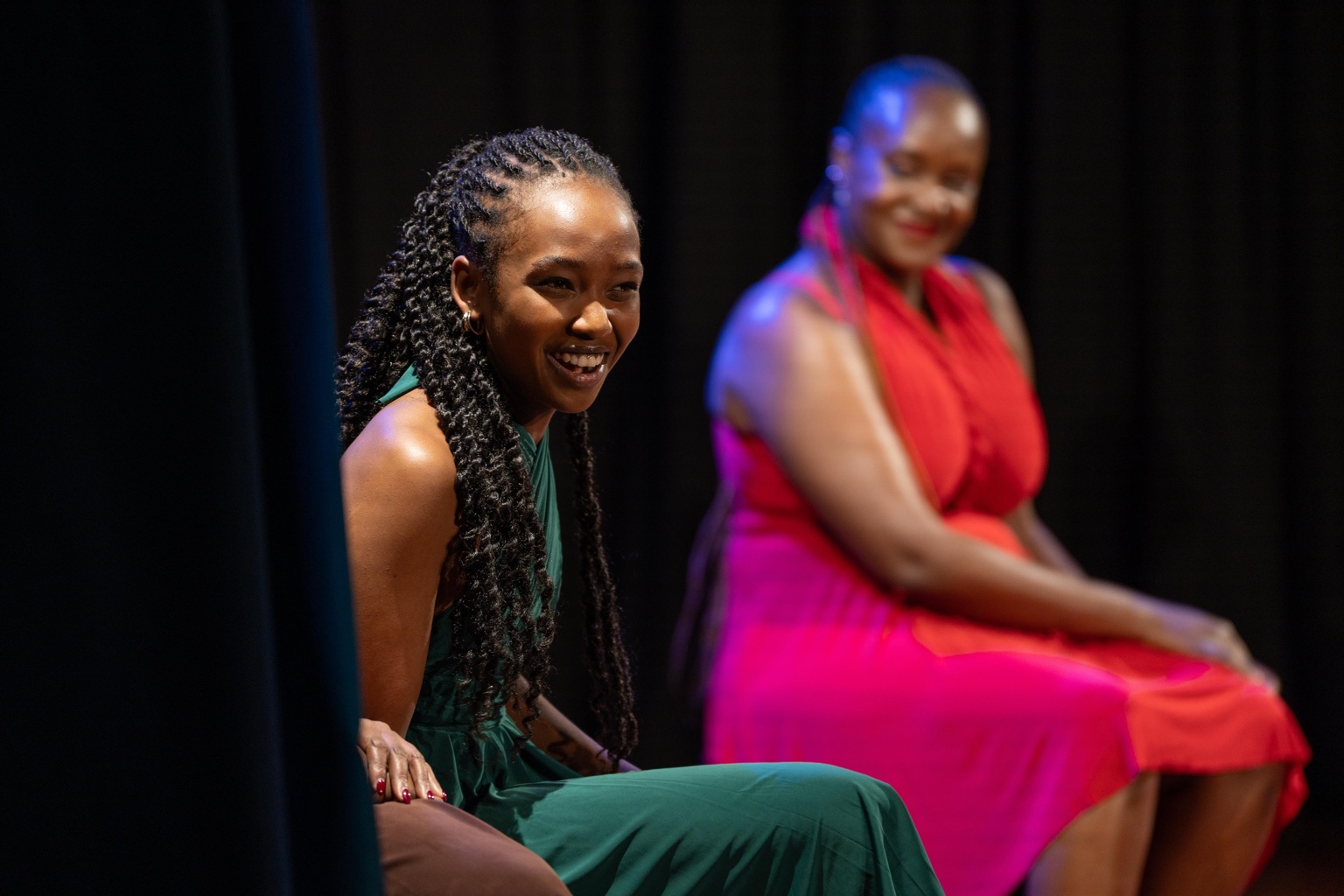
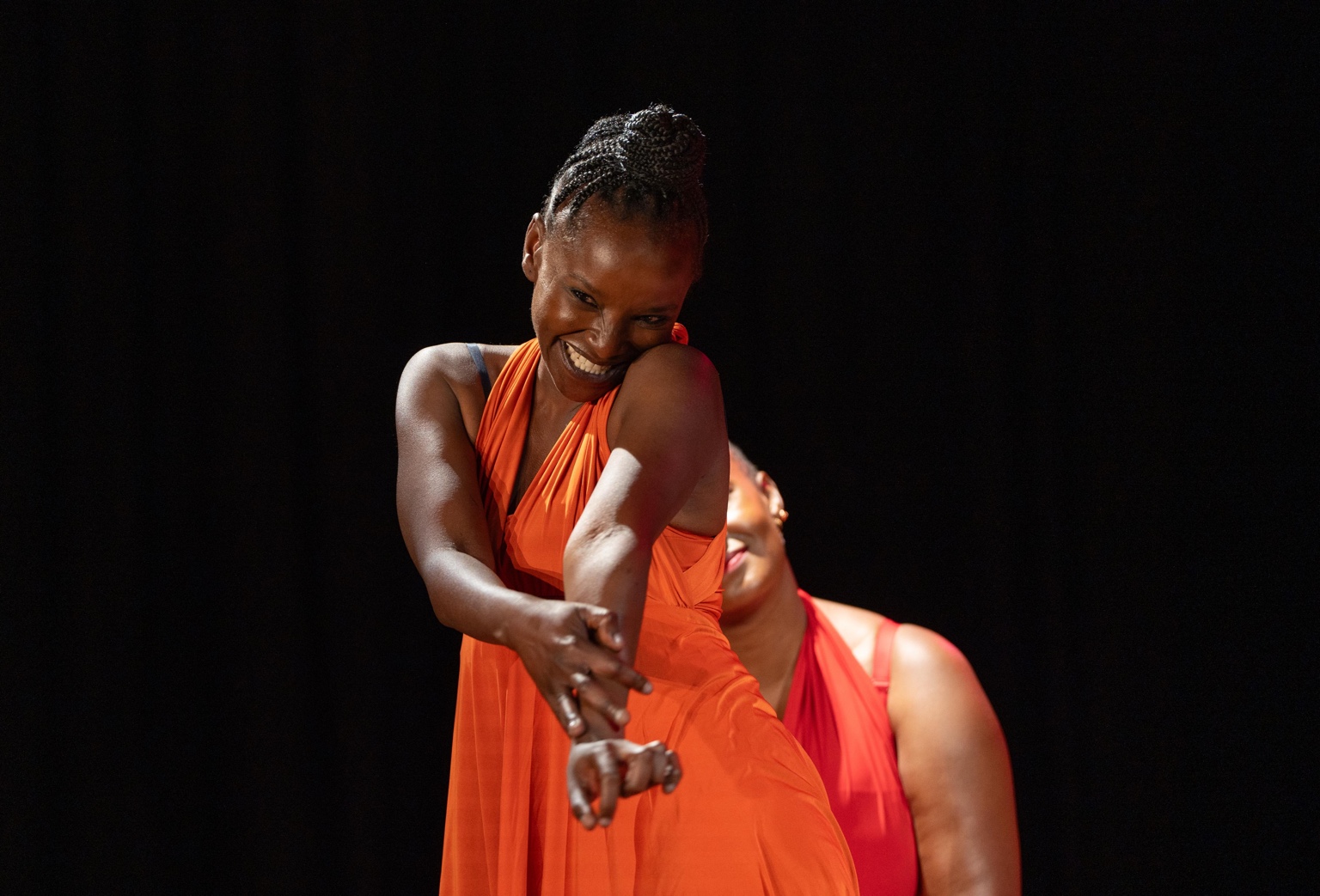
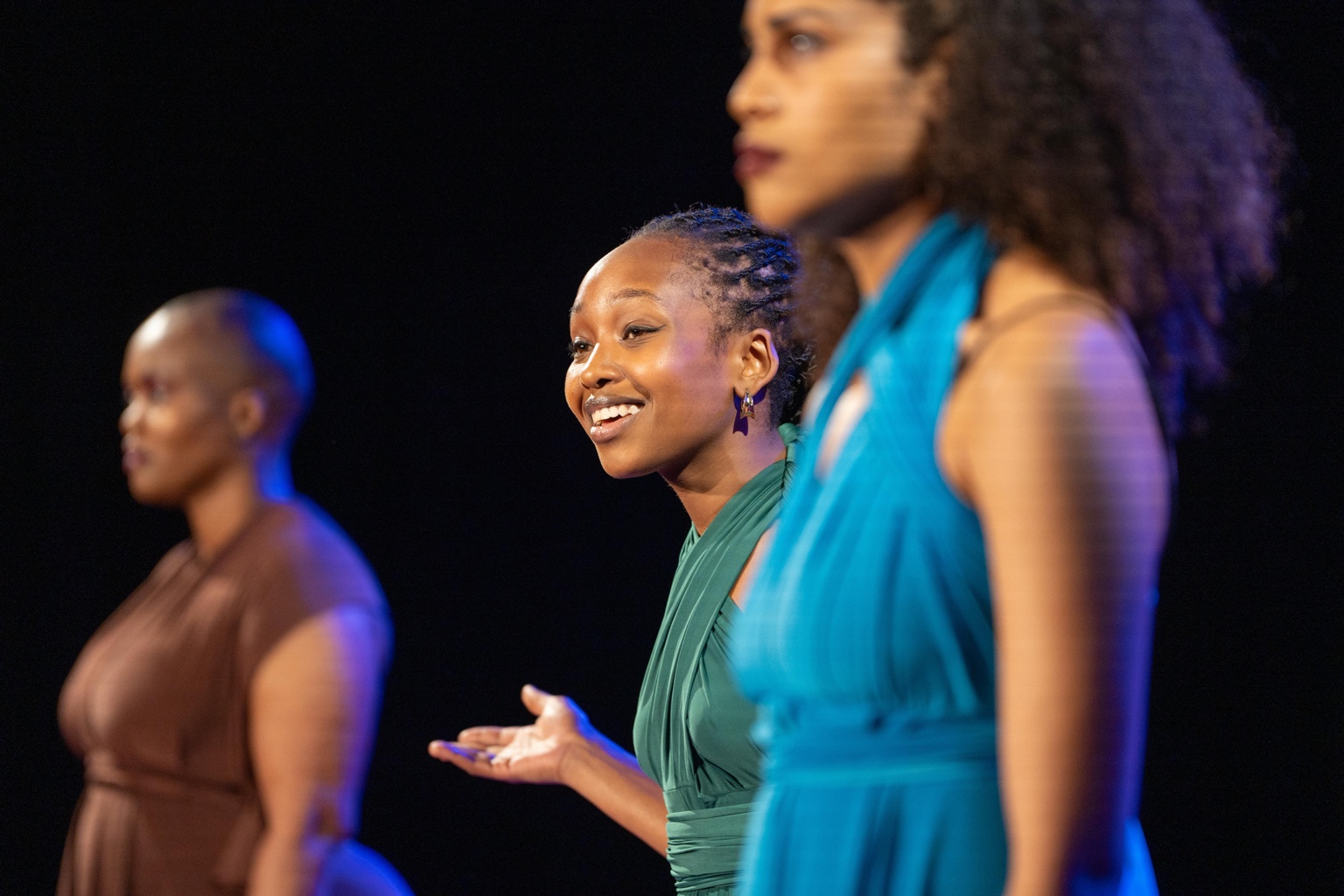
Nærvær i close-up
Produktionen stolede på ansigtet. Den lod glæde, sårbarhed, dristighed og selvbesiddelse træde frem uden at overforklare sig selv.
Scene IV
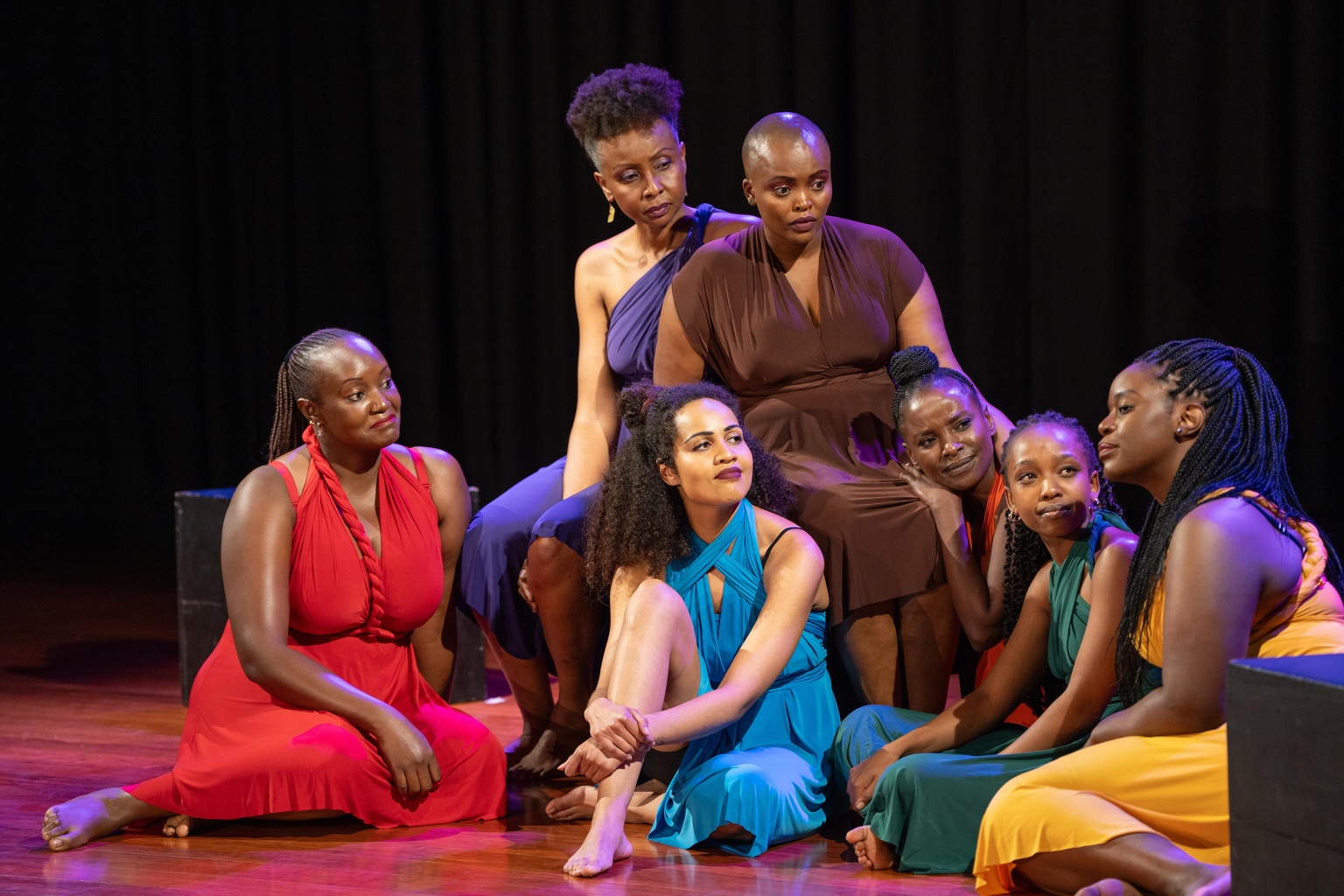
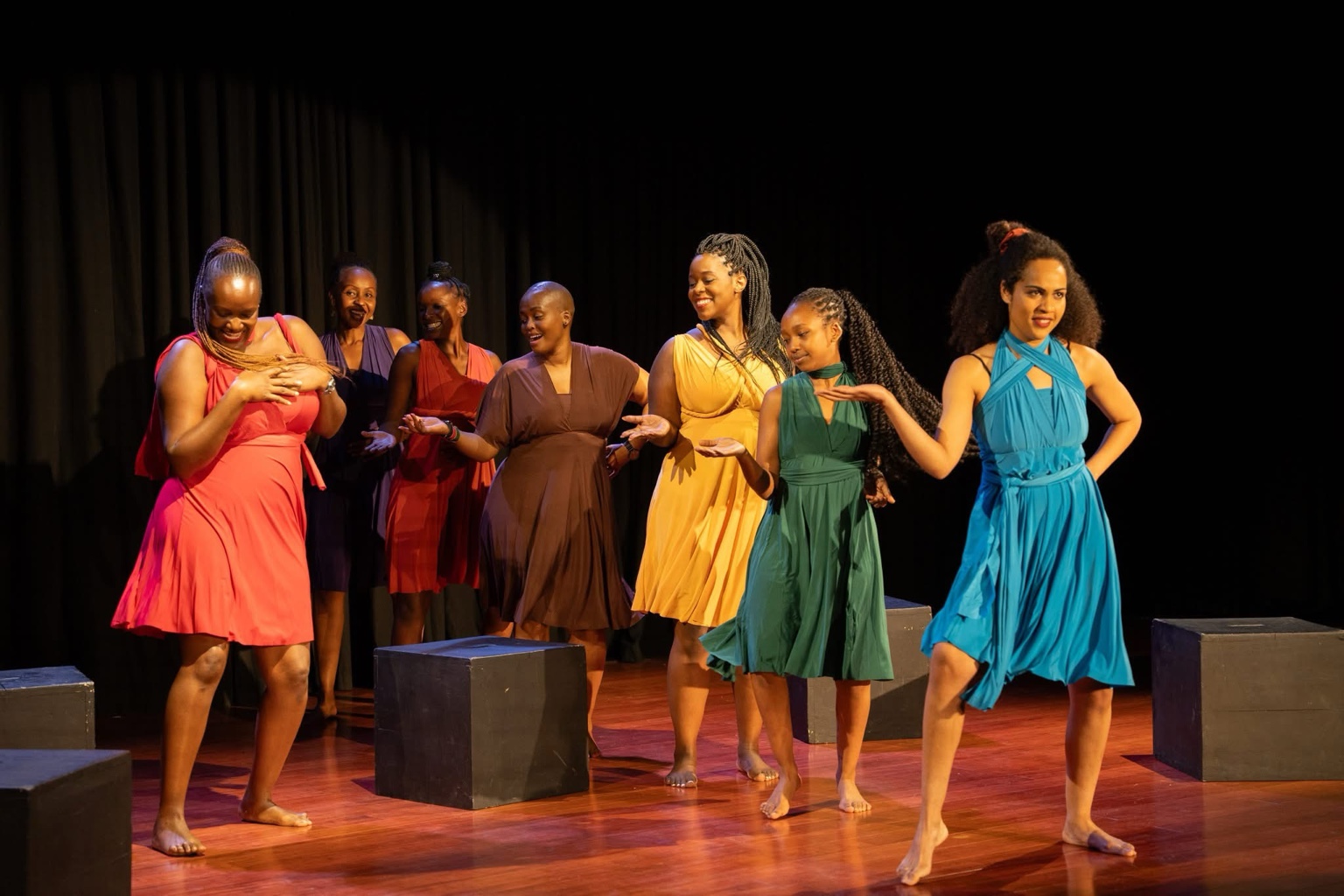
Ensemblets varme
Gruppen bærer værkets temperatur: flirt, glæde, forløsning, vidneskab og den farlige skønhed i kvinder, der nægter at forsvinde.
Særlig fotokredit
Saiba Sehmi
Projektfotograf
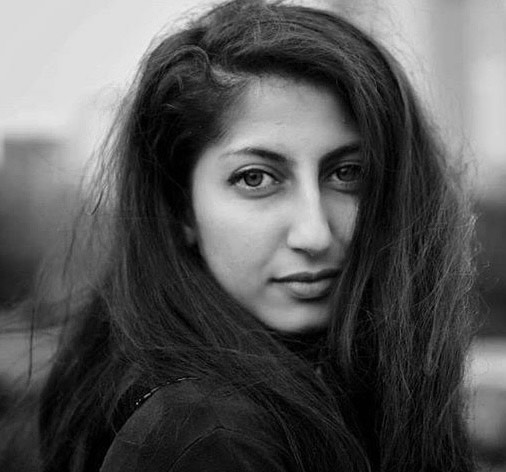
Saiba Sehmis fotografiske blik holder produktionen med usædvanlig ro og intimitet. Hendes billeder registrerer ikke blot scenehandling; de bevarer atmosfære, relation og den stille spænding mellem kvinder, før gestussen bliver til begivenhed.
Denne side bærer hendes nærvær med vilje. Produktionens sanselige visuelle hukommelse skylder meget til hendes linses blødhed, præcision og kompositoriske intelligens.
Medvirkende
Medvirkende & kreativt hold
Sceneensemblet og de kvinder, der var med til at forme værket omkring det.
Skuespillere
- Dame i brun
- Mbeki Mwalimu
- Dame i lilla
- Nini Wacera
- Dame i blå
- Rebecca Langley
- Dame i gul
- Melissa Kiplagat
- Dame i rød
- Marianne Nungo
- Dame i orange
- Wanjiku-Victoria Seest
- Dame i grøn
- Tana Gachoka
Kerneproduktion
- Eksekutiv producent · kunstnerisk leder
- Michael Omoke
- Instruktør
- Cheryl J. Williams
- Assisterende producent
- Anna Marie B. Skanborg
- Logistikansvarlig
- Julisa Rowe
- Assisterende logistik
- Sakina Mildred
- Koreograf
- Ondiegi Mathew
- Lysdesigner
- Charles Stephen
- Kostumeansvarlig
- Vicki L. Jones
Visuelt & kommunikation
- Projektfotograf
- Saiba Sehmi
- Sociale medier
- Ramya Sehmi
- Grafisk designer
- Aïcha E. Haidara
- Presse & relationer
- Angela Mutegi
- Webudvikler
- Elisha Ngoma
Kvinder omkring værket
Udvidet kreativ kreds
Fem kvinder, hvis arbejde var med til at forme, hvordan produktionen blev set, båret og mødt i verden uden for selve scenebilledet.

Ramya Sehmi
Sociale medier
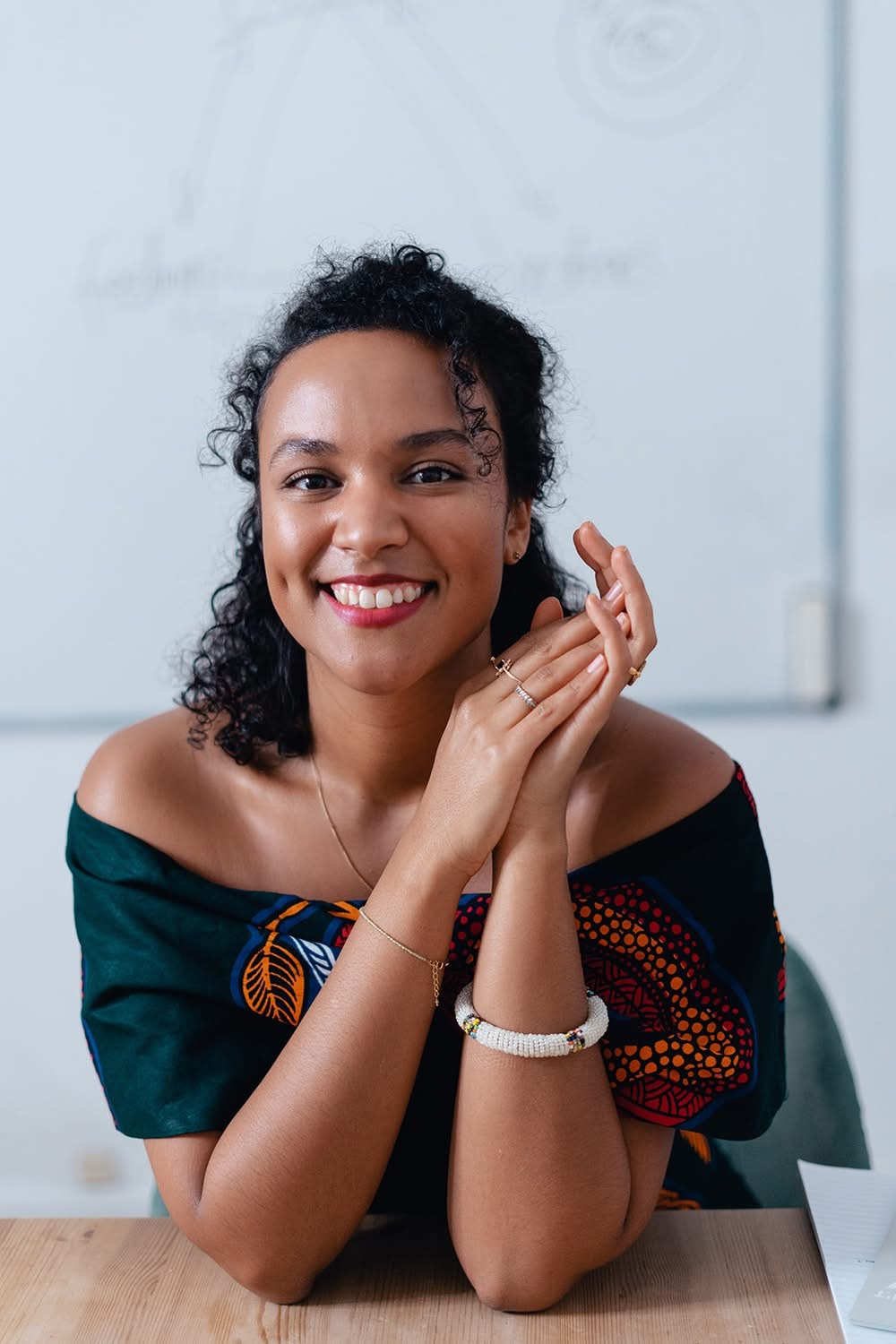
Aïcha E. Haidara
Grafisk designer

Angela Mutegi
Presse & relationer

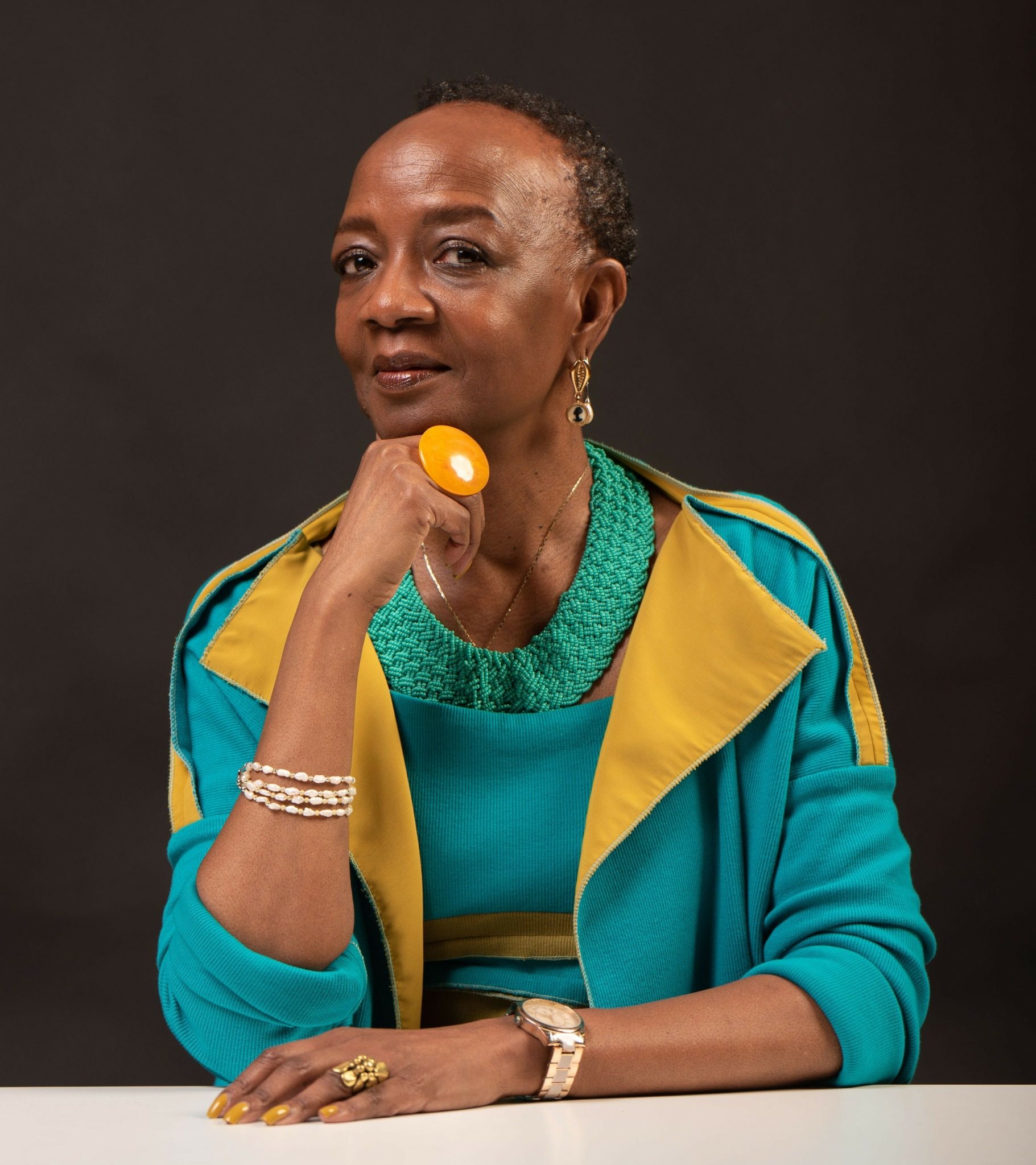
Vicki L. Jones
Kostumedesigner